Dobutamine and Inotrope Therapy at Home: Advanced Heart Failure Care

July 17, 2026

For patients with Stage D (end-stage) heart failure who are no longer responding adequately to oral medications, continuous IV inotrope therapy can provide meaningful symptom relief and allow patients to live outside the hospital. Dobutamine, alongside milrinone, is one of the two most commonly used home inotropes, and understanding how it works, who it benefits, and how it is managed at home is essential for patients, families, and the cardiology teams guiding their care.


Pharmko provides continuous home inotrope therapy as part of our home infusion services across 22+ states, working in close coordination with heart failure programs to support safe, medically supervised transitions from inpatient to home-based cardiac care.


What Is Dobutamine and How Does It Work?


Dobutamine is a synthetic catecholamine that acts primarily on beta-1 adrenergic receptors in the heart. Unlike dopamine, which has dose-dependent effects on both cardiac and vascular receptors, dobutamine's action is more selectively focused on improving cardiac contractility, the force with which the heart muscle squeezes, without proportionally increasing heart rate at standard clinical doses.


In patients with advanced heart failure, the failing myocardium is unable to generate sufficient output to meet the body's demands. Dobutamine compensates by:


  • Increasing stroke volume, the amount of blood ejected with each heartbeat
  • Reducing filling pressures, the backup pressure that causes pulmonary congestion and dyspnea
  • Improving cardiac output, restoring end-organ perfusion to the kidneys, liver, and extremities
  • Relieving dyspnea, fatigue, and edema that do not respond to diuretics and other oral therapies


Dobutamine vs Milrinone: How They Compare


Both dobutamine and milrinone are used for continuous home inotrope therapy in Stage D heart failure, but they have different mechanisms and different side effect profiles:


  • Mechanism: Dobutamine is a beta-adrenergic agonist (stimulates adrenergic receptors); milrinone is a PDE-3 inhibitor (blocks phosphodiesterase to prevent cAMP breakdown). Both increase myocardial contractility, but through distinct pathways
  • Heart rate: Dobutamine tends to increase heart rate more than milrinone, which can be problematic in patients with baseline tachycardia or atrial fibrillation
  • Vasodilation: Milrinone produces more pronounced systemic vasodilation (reducing afterload) compared to dobutamine; this can be advantageous or disadvantageous depending on baseline blood pressure
  • Arrhythmia risk: Both agents carry proarrhythmic risk; individual patient history and ECG findings guide agent selection
  • Beta-blocker interaction: Dobutamine's effects can be blunted by beta-blockers, which many heart failure patients are already taking; milrinone is not affected by beta-blockade


The choice between dobutamine and milrinone is made by the cardiologist based on the patient's specific hemodynamic profile, concurrent medications, and clinical goals.


Who Is a Candidate for Home Dobutamine Therapy?


Home continuous dobutamine therapy is considered for patients who:


  • Have Stage D (end-stage) heart failure with refractory symptoms despite optimal oral therapy including ACE inhibitors/ARBs, beta-blockers, aldosterone antagonists, and diuretics
  • Have demonstrated symptomatic improvement with IV dobutamine during a hospital admission
  • Are not candidates for or are awaiting heart transplantation or mechanical circulatory support (LVAD)
  • Have a central venous access device (PICC line or tunneled catheter) in place or appropriate for placement
  • Have a stable home environment with caregiver support and the capacity for safe line management
  • Have established goals of care that include continued active treatment or palliative comfort at home


Home dobutamine is used in two primary contexts: as a bridge to transplant or LVAD in transplant-eligible patients, or as palliative therapy in patients who are not transplant candidates but wish to remain at home with improved symptom management.


What Home Dobutamine Therapy Involves


Continuous infusion via portable pump


Dobutamine is infused continuously, 24 hours a day, through a small portable pump connected to the patient's central line. The infusion rate is set by the cardiologist based on the patient's hemodynamic goals and titrated during the initial hospital stay before home discharge. Pharmko delivers premixed dobutamine cassettes or bags on a regular schedule and provides all supplies for the pump and line.


Central line management


Because dobutamine is infused continuously through a central line, central line care is a daily clinical responsibility. Pharmko's nurses provide thorough training in dressing changes, flushing protocol, and CLABSI prevention before the patient goes home, and conduct regular home visits throughout the course of therapy.


Monitoring


Patients on home dobutamine require regular cardiac monitoring, including heart rate and rhythm assessment, blood pressure monitoring, and kidney function labs, coordinated between the heart failure cardiologist and Pharmko's clinical team. Our nursing team conducts scheduled home visits and is available through our 24/7 after-hours support line for any concerns that arise between visits. Know which symptoms require an immediate call, new arrhythmias, significant blood pressure changes, or worsening edema are all reasons to contact the clinical team promptly.


Goals of Care and Family Communication


Home inotrope therapy for advanced heart failure is not a curative treatment. It manages symptoms and may extend time outside the hospital, but it does not reverse the underlying disease. For many patients, starting home dobutamine represents a transition in the goals of care, from aggressive disease modification toward comfort, function, and time at home with family.


Pharmko's clinical team works alongside the cardiologist and, where appropriate, the palliative care team to support patients and families through this transition. Decisions about continuing, adjusting, or discontinuing therapy remain with the patient, family, and medical team, Pharmko's role is to ensure that whatever is decided can be carried out safely and with full clinical support.


Contact Pharmko to discuss home inotrope therapy: 1-877-540-2003


CIDP and Home Infusion: IVIG Treatment, Dosing Schedule, and Long-Term Management
July 16, 2026
Learn how IVIG therapy works for CIDP, what the dosing schedule looks like, how to transition to home infusion, and how Pharmko supports long-term CIDP management across 22+ states.
Compounded IV Medications
July 15, 2026
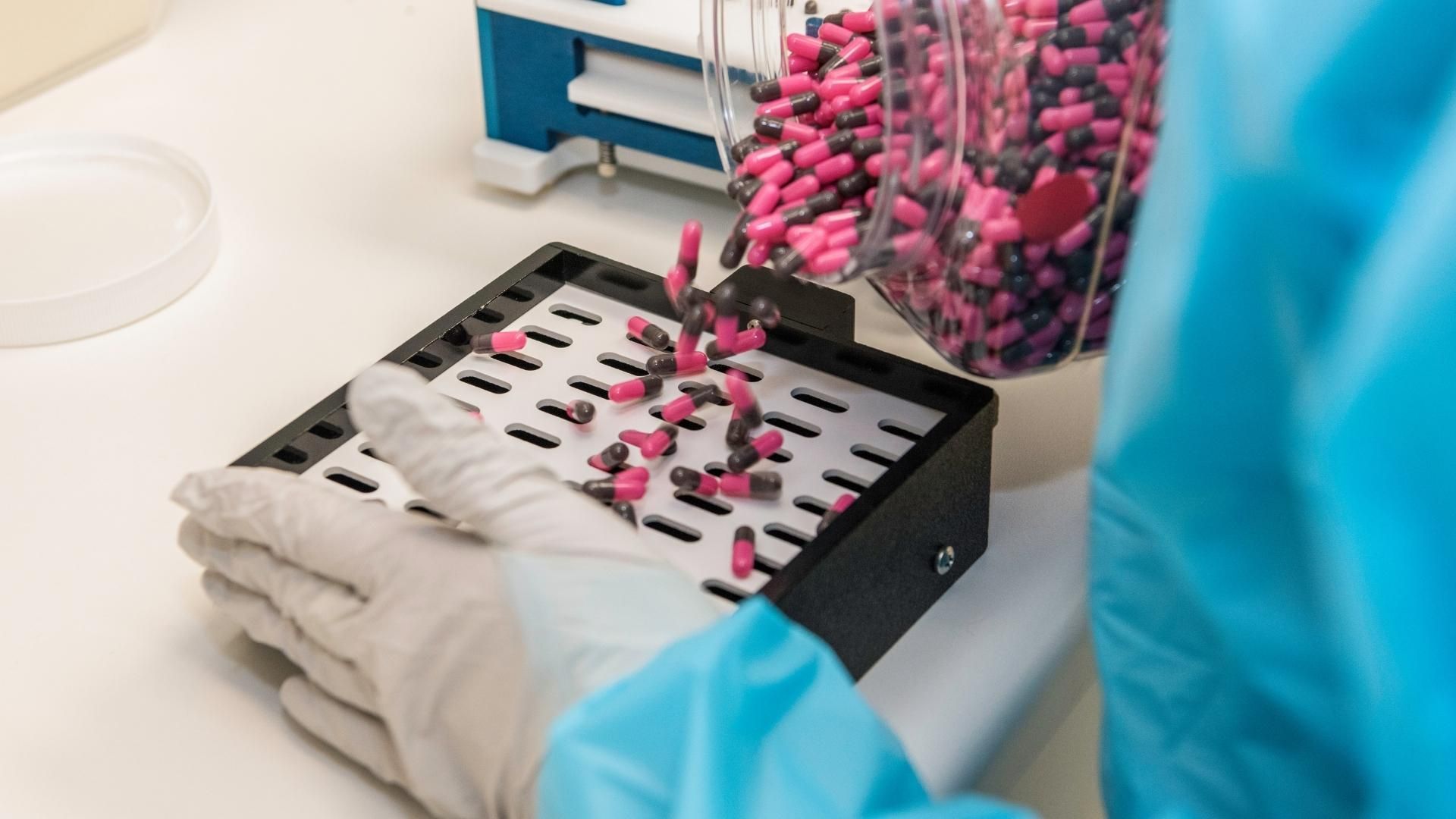
Most medications that patients receive at a hospital or pharmacy come in standardized, commercially manufactured forms, a 500mg antibiotic vial, a pre-filled syringe, a fixed-concentration IV bag. These products work well for many patients. But a significant portion of patients receiving IV therapy have clinical needs that commercial products cannot meet: a dose the manufacturer doesn't make, a formulation incompatible with the patient's allergy profile, or a combination of nutrients that must be tailored to individual lab values. For these patients, compounded IV medications are not optional, they are clinically necessary. Pharmko's sterile compounding services prepare customized IV medications for patients across 22+ states, with every formulation reviewed by a licensed pharmacist and prepared in a USP <797> compliant cleanroom. What Makes an IV Medication 'Compounded'? A compounded medication is one that is prepared specifically for an individual patient by a licensed pharmacist, rather than manufactured in bulk by a pharmaceutical company. Compounding involves combining, mixing, or altering ingredients, active pharmaceutical ingredients, diluents, preservatives, to create a final preparation that meets the patient's unique prescription requirements. For IV therapy specifically, compounding means preparing a sterile preparation, one that is completely free of viable microorganisms and safe to inject or infuse directly into the bloodstream. This requires specialized facilities, equipment, training, and quality systems that go far beyond what a standard retail pharmacy can provide. Pharmko is exclusively a sterile compounding pharmacy. We do not compound oral medications, topical creams, or non-sterile preparations. Every product we make is intended for intravenous, intraperitoneal, or subcutaneous administration. When Are Compounded IV Medications Necessary? The required dose doesn't exist commercially Pharmaceutical manufacturers produce medications in standardized strengths and volumes based on average patient needs. Pediatric patients, patients with renal or hepatic impairment requiring dose adjustments, or patients whose weight or clinical status falls outside standard ranges may need concentrations or volumes that no commercial product provides. Compounding fills this gap precisely. The patient has an allergy to a commercial formulation's inactive ingredients Commercial IV products often contain preservatives, stabilizers, or diluents, sulfites, benzyl alcohol, certain dyes, that some patients cannot tolerate. A compounding pharmacy can prepare an equivalent formulation without the offending ingredient, allowing the patient to receive the therapy safely. The medication requires individualized nutrient formulation Total parenteral nutrition (TPN) is the clearest example: every TPN formula must be individually compounded because no commercial product can provide the precise combination of amino acids, dextrose, lipids, electrolytes, vitamins, and trace minerals a specific patient needs. The formula changes as the patient's labs, weight, and clinical status change, making standardization impossible. The commercial product is unavailable or in shortage Drug shortages are a persistent reality in the US pharmaceutical supply chain. When a commercially manufactured IV medication becomes unavailable, compounding pharmacies can often prepare an equivalent formulation from available active pharmaceutical ingredients, bridging the gap and maintaining continuity of therapy for patients who cannot wait. The therapy requires a custom delivery format Some IV medications require specific pH, osmolarity, or concentration adjustments for compatibility with a patient's IV access device or concurrent medications. A compounding pharmacist reviews compatibility and prepares formulations that are safe and stable for the specific administration route and equipment the patient is using. How Compounded IV Medications Are Made Step 1: Prescription review Every compounded IV medication begins with a valid prescription from a licensed prescriber. Pharmko's pharmacists review the prescription for clinical appropriateness, dosing accuracy, ingredient compatibility, and stability before compounding begins. Step 2: Ingredient sourcing and verification Active pharmaceutical ingredients for compounding must come from FDA-registered suppliers and meet USP monograph specifications. Each lot is verified for identity, potency, and purity before use. Step 3: Sterile preparation in a controlled environment Preparation occurs in an ISO Class 5 laminar airflow workbench or biological safety cabinet, located within a buffer room that meets ISO Class 7 air quality standards. Pharmacy technicians follow validated, written procedures for each preparation type, using aseptic technique to prevent contamination at every step. Step 4: Pharmacist verification and release A licensed pharmacist performs a final check of every preparation, verifying appearance, volume, labeling, and documentation, before the product is released. High-risk or complex preparations may undergo sterility testing with defined beyond-use dates based on test results. Step 5: Cold-chain delivery Most compounded IV medications require refrigeration. Pharmko uses validated cold-chain packaging and delivery logistics to ensure products arrive within their stability windows and remain temperature-controlled until the patient uses them. Quality Standards That Matter Not all compounding pharmacies operate at the same standard. The relevant quality benchmarks for sterile compounding are: USP <797> compliance, the national standard for sterile compounding environments, personnel, and processes. Our guide on USP <797> and USP <800> explains what compliance means in practice ACHC accreditation, independent third-party verification that Pharmko meets clinical quality standards for home infusion and sterile compounding State pharmacy board licensure, Pharmko is licensed in every state where we serve patients Environmental and personnel monitoring, documented air and surface sampling, personnel gowning competency assessments, and media fill testing at defined intervals For a foundational overview of what sterile compounding is and how it differs from retail pharmacy, see our guide on what is sterile compounding for IV therapy . → Contact Pharmko about compounded IV medications: 1-877-540-2003
home infusion therapy Pennsylvania
July 14, 2026
Pharmko provides home infusion therapy across Pennsylvania, IV antibiotics, IVIG, TPN, biologics, and specialty medications. Licensed, ACHC accredited, and available 24/7 statewide.
Home Infusion Therapy in New Jersey
July 14, 2026
Pharmko provides home infusion therapy across New Jersey, IV antibiotics, IVIG, TPN, IDPN, biologics, and more. Licensed, ACHC accredited, and available 24/7 statewide.
Renal dietitian reviewing albumin labs for a peritoneal dialysis patient
July 10, 2026
When to consider IPN for peritoneal dialysis patients with low albumin: clinical criteria, the stepwise nutrition approach, and the referral process.
Nephrologist reviewing dialysis nutrition options for an ESRD patient
July 10, 2026
IPN vs. IDPN explained: how each parenteral nutrition therapy works, who qualifies, and how to choose the right option for ESRD dialysis patients.
How Home Infusion Reduces Hospital Readmissions
July 10, 2026
Home infusion therapy is associated with lower hospital readmission rates, fewer complications, and significant cost savings. Review the clinical evidence and learn how Pharmko supports discharge planning teams.
Primary Immune Deficiency and IVIG: A Guide for Newly Diagnosed Patients
July 8, 2026
Newly diagnosed with primary immune deficiency? Learn how IVIG therapy works, what to expect from your first infusions, how home IVIG is coordinated, and how Pharmko supports PID patients long-term.
Why They Matter and How Pharmko Customizes Your Formula
July 8, 2026
Trace minerals are essential components of every TPN formula. Learn what trace elements are included in parenteral nutrition, why each matters clinically, and how Pharmko pharmacists individualize your formula.
How to Choose a Home Infusion Pharmacy
June 26, 2026
Not all home infusion pharmacies are equal. Learn the 7 key questions to ask before choosing a specialty pharmacy, accreditation, clinical support, state licensing, and more.
Show More