IVIG Therapy at Home: What Patients Need to Know Before Starting

April 17, 2026

Intravenous immunoglobulin (IVIG) therapy is used for a wide range of immune system conditions , from primary immunodeficiencies to chronic inflammatory neuropathies and autoimmune diseases. For many patients, receiving IVIG through home infusion therapy is preferable to repeated hospital or infusion center visits, offering the same clinical benefits in a more comfortable environment.


What Is IVIG Therapy?


IVIG is a concentrated solution of antibodies (immunoglobulins) derived from donated human plasma. When infused intravenously, it helps regulate the immune system , either by supplementing deficient antibody levels or by dampening overactive immune responses. Pharmko provides IVIG therapy across 23 states with full clinical support from first dose to maintenance.

Conditions commonly treated with IVIG include:


  • Primary immune deficiency (PID)
  • Chronic inflammatory demyelinating polyneuropathy (CIDP)
  • Multifocal motor neuropathy (MMN)
  • Myasthenia gravis · Guillain-Barré syndrome
  • Autoimmune cytopenias (ITP, AIHA)
  • Kawasaki disease


Can You Receive IVIG at Home?


Yes. Home IVIG therapy is well established for patients on maintenance infusion schedules. It is typically recommended once the patient has tolerated their initial doses in a clinical setting without significant adverse reactions, and their condition is stable enough for home-based care. Pharmko works directly with your prescribing provider to coordinate the transition, and our team manages insurance coverage and prior authorization from the start.


What to Expect During a Home IVIG Infusion


Infusion duration


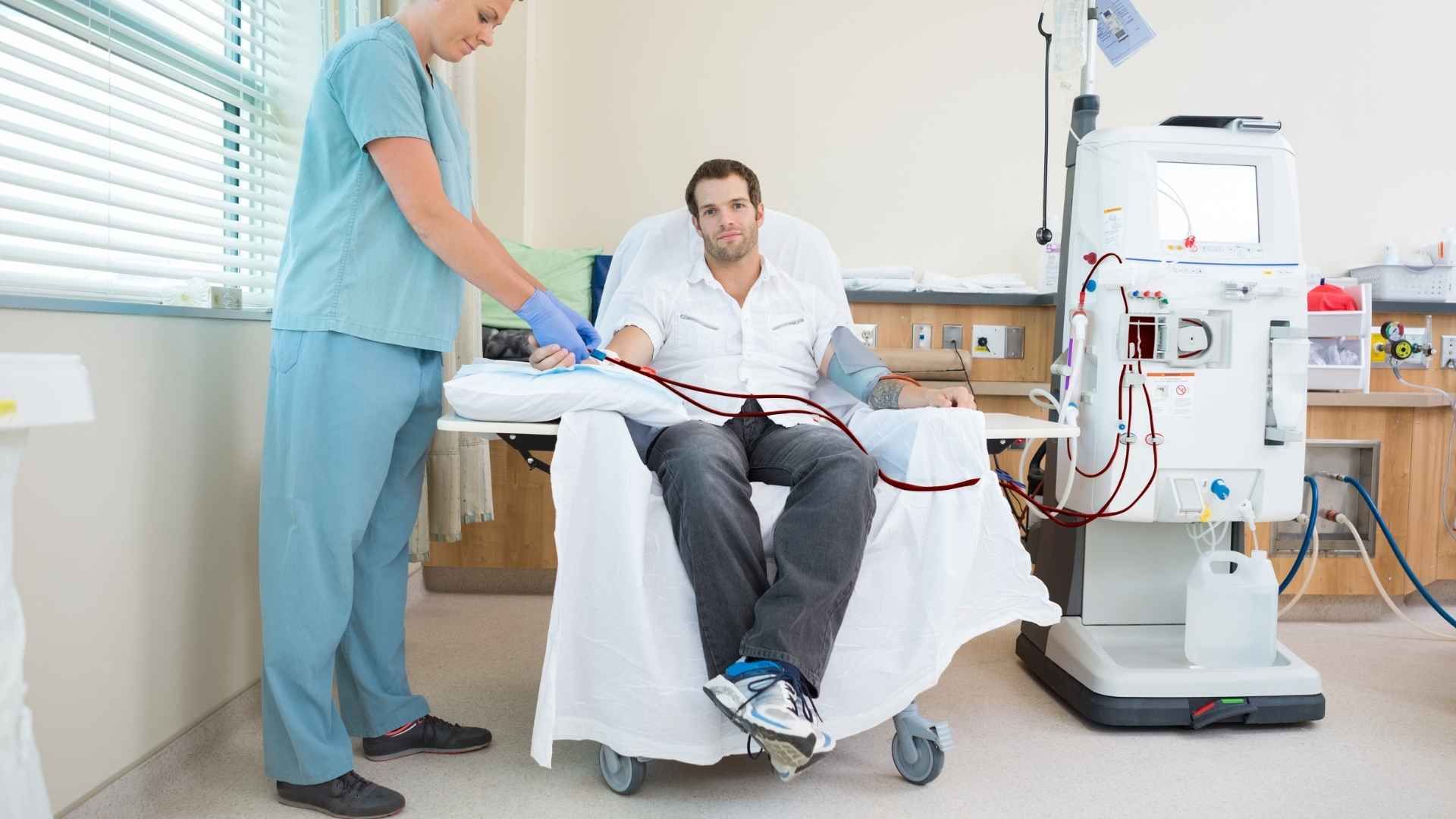
IVIG infusions typically take 2 to 6 hours depending on your dose, rate, and the specific product prescribed. Some patients on subcutaneous IVIG (SCIG) have shorter, more frequent sessions. Your Pharmko nurse will explain the schedule specific to your prescription at your first visit.


Setup and monitoring


For your first home infusion, a Pharmko nurse will be present to monitor your vital signs, confirm IV access, and respond to any early reactions. Mild side effects , headache, fatigue, low-grade fever , can occur and are usually manageable. Your care team will walk you through what is normal and what warrants a call. Keep our red flags guide bookmarked before your first infusion.


Frequency


Most IVIG maintenance schedules run every 3 to 4 weeks. Your schedule is set by your physician and coordinated by Pharmko around your routine.


Side Effects to Know


Common side effects include headache, fatigue, chills, mild fever, and nausea. More serious reactions , allergic responses, blood clots, kidney changes , are rare but require immediate attention. Our 24/7 after-hours support line is available throughout your treatment for anything that cannot wait until the next business day.


Why Choose Pharmko for Home IVIG?


Pharmko's pharmacists prepare every IVIG dose in a USP <797> compliant sterile environment. Our nursing team provides hands-on training, ongoing monitoring, and around-the-clock clinical support. Check our covered service areas to confirm we operate in your state.


Contact Pharmko to start a referral: 1-877-549-3863

CIDP and Home Infusion: IVIG Treatment, Dosing Schedule, and Long-Term Management
July 16, 2026
Learn how IVIG therapy works for CIDP, what the dosing schedule looks like, how to transition to home infusion, and how Pharmko supports long-term CIDP management across 22+ states.
Compounded IV Medications
July 15, 2026
Most medications that patients receive at a hospital or pharmacy come in standardized, commercially manufactured forms, a 500mg antibiotic vial, a pre-filled syringe, a fixed-concentration IV bag. These products work well for many patients. But a significant portion of patients receiving IV therapy have clinical needs that commercial products cannot meet: a dose the manufacturer doesn't make, a formulation incompatible with the patient's allergy profile, or a combination of nutrients that must be tailored to individual lab values. For these patients, compounded IV medications are not optional, they are clinically necessary. Pharmko's sterile compounding services prepare customized IV medications for patients across 22+ states, with every formulation reviewed by a licensed pharmacist and prepared in a USP <797> compliant cleanroom. What Makes an IV Medication 'Compounded'? A compounded medication is one that is prepared specifically for an individual patient by a licensed pharmacist, rather than manufactured in bulk by a pharmaceutical company. Compounding involves combining, mixing, or altering ingredients, active pharmaceutical ingredients, diluents, preservatives, to create a final preparation that meets the patient's unique prescription requirements. For IV therapy specifically, compounding means preparing a sterile preparation, one that is completely free of viable microorganisms and safe to inject or infuse directly into the bloodstream. This requires specialized facilities, equipment, training, and quality systems that go far beyond what a standard retail pharmacy can provide. Pharmko is exclusively a sterile compounding pharmacy. We do not compound oral medications, topical creams, or non-sterile preparations. Every product we make is intended for intravenous, intraperitoneal, or subcutaneous administration. When Are Compounded IV Medications Necessary? The required dose doesn't exist commercially Pharmaceutical manufacturers produce medications in standardized strengths and volumes based on average patient needs. Pediatric patients, patients with renal or hepatic impairment requiring dose adjustments, or patients whose weight or clinical status falls outside standard ranges may need concentrations or volumes that no commercial product provides. Compounding fills this gap precisely. The patient has an allergy to a commercial formulation's inactive ingredients Commercial IV products often contain preservatives, stabilizers, or diluents, sulfites, benzyl alcohol, certain dyes, that some patients cannot tolerate. A compounding pharmacy can prepare an equivalent formulation without the offending ingredient, allowing the patient to receive the therapy safely. The medication requires individualized nutrient formulation Total parenteral nutrition (TPN) is the clearest example: every TPN formula must be individually compounded because no commercial product can provide the precise combination of amino acids, dextrose, lipids, electrolytes, vitamins, and trace minerals a specific patient needs. The formula changes as the patient's labs, weight, and clinical status change, making standardization impossible. The commercial product is unavailable or in shortage Drug shortages are a persistent reality in the US pharmaceutical supply chain. When a commercially manufactured IV medication becomes unavailable, compounding pharmacies can often prepare an equivalent formulation from available active pharmaceutical ingredients, bridging the gap and maintaining continuity of therapy for patients who cannot wait. The therapy requires a custom delivery format Some IV medications require specific pH, osmolarity, or concentration adjustments for compatibility with a patient's IV access device or concurrent medications. A compounding pharmacist reviews compatibility and prepares formulations that are safe and stable for the specific administration route and equipment the patient is using. How Compounded IV Medications Are Made Step 1: Prescription review Every compounded IV medication begins with a valid prescription from a licensed prescriber. Pharmko's pharmacists review the prescription for clinical appropriateness, dosing accuracy, ingredient compatibility, and stability before compounding begins. Step 2: Ingredient sourcing and verification Active pharmaceutical ingredients for compounding must come from FDA-registered suppliers and meet USP monograph specifications. Each lot is verified for identity, potency, and purity before use. Step 3: Sterile preparation in a controlled environment Preparation occurs in an ISO Class 5 laminar airflow workbench or biological safety cabinet, located within a buffer room that meets ISO Class 7 air quality standards. Pharmacy technicians follow validated, written procedures for each preparation type, using aseptic technique to prevent contamination at every step. Step 4: Pharmacist verification and release A licensed pharmacist performs a final check of every preparation, verifying appearance, volume, labeling, and documentation, before the product is released. High-risk or complex preparations may undergo sterility testing with defined beyond-use dates based on test results. Step 5: Cold-chain delivery Most compounded IV medications require refrigeration. Pharmko uses validated cold-chain packaging and delivery logistics to ensure products arrive within their stability windows and remain temperature-controlled until the patient uses them. Quality Standards That Matter Not all compounding pharmacies operate at the same standard. The relevant quality benchmarks for sterile compounding are: USP <797> compliance, the national standard for sterile compounding environments, personnel, and processes. Our guide on USP <797> and USP <800> explains what compliance means in practice ACHC accreditation, independent third-party verification that Pharmko meets clinical quality standards for home infusion and sterile compounding State pharmacy board licensure, Pharmko is licensed in every state where we serve patients Environmental and personnel monitoring, documented air and surface sampling, personnel gowning competency assessments, and media fill testing at defined intervals For a foundational overview of what sterile compounding is and how it differs from retail pharmacy, see our guide on what is sterile compounding for IV therapy . → Contact Pharmko about compounded IV medications: 1-877-540-2003
home infusion therapy Pennsylvania
July 14, 2026
Pharmko provides home infusion therapy across Pennsylvania, IV antibiotics, IVIG, TPN, biologics, and specialty medications. Licensed, ACHC accredited, and available 24/7 statewide.
Home Infusion Therapy in New Jersey
July 14, 2026
Pharmko provides home infusion therapy across New Jersey, IV antibiotics, IVIG, TPN, IDPN, biologics, and more. Licensed, ACHC accredited, and available 24/7 statewide.
Renal dietitian reviewing albumin labs for a peritoneal dialysis patient
July 10, 2026
When to consider IPN for peritoneal dialysis patients with low albumin: clinical criteria, the stepwise nutrition approach, and the referral process.
Nephrologist reviewing dialysis nutrition options for an ESRD patient
July 10, 2026
IPN vs. IDPN explained: how each parenteral nutrition therapy works, who qualifies, and how to choose the right option for ESRD dialysis patients.
How Home Infusion Reduces Hospital Readmissions
July 10, 2026
Home infusion therapy is associated with lower hospital readmission rates, fewer complications, and significant cost savings. Review the clinical evidence and learn how Pharmko supports discharge planning teams.
Primary Immune Deficiency and IVIG: A Guide for Newly Diagnosed Patients
July 8, 2026
Newly diagnosed with primary immune deficiency? Learn how IVIG therapy works, what to expect from your first infusions, how home IVIG is coordinated, and how Pharmko supports PID patients long-term.
Why They Matter and How Pharmko Customizes Your Formula
July 8, 2026
Trace minerals are essential components of every TPN formula. Learn what trace elements are included in parenteral nutrition, why each matters clinically, and how Pharmko pharmacists individualize your formula.
How to Choose a Home Infusion Pharmacy
June 26, 2026
Not all home infusion pharmacies are equal. Learn the 7 key questions to ask before choosing a specialty pharmacy, accreditation, clinical support, state licensing, and more.
Show More